Research & Development
We explore AI methods that solve real operational problems, from learning and perception to automation and decision support.
Prediction, classification, optimization, and anomaly detection on industrial data, including machine learning for industry use cases.
Generation for technical documentation, design assistance, and knowledge work.
Autonomous agents that plan and execute multi-step industrial tasks, adapting to changing conditions.
Industrial AI software built for real operating environments, with attention to noisy data, deployment constraints, reliability, safety, and explainability.
Computer vision quality inspection supports detection, measurement, and visual guidance where consistent inspection matters.
Predictive maintenance AI identifies patterns associated with equipment condition and emerging failures, while predictive models support demand, quality, and throughput planning.
Turning technical knowledge into searchable, usable intelligence for engineering teams.
AI workflow automation supports complex, variable processes that fixed rules alone cannot handle effectively.
Systems that turn data and models into faster, better operational decisions.
Real-World Applications
Research only matters when it ships. AI applications in manufacturing include equipment monitoring, production forecasting, operational analytics, visual inspection, and intelligent knowledge tools. Our industrial AI solutions apply where data and models can improve reliability, quality, planning, decision-making, or workflow execution.
How We Engineer AI Responsibly
Industrial AI carries real consequences, so we engineer for reliability, explainability, data governance, and human oversight. We validate models against operational data, monitor production performance, and start from the business outcome rather than the algorithm. We select models, tools, and platforms according to the problem.
Deep Learning & GPU-Accelerated Training
Modern industrial AI uses deep learning and GPU-accelerated computing for demanding training and inference. We design, train, and optimize models for vision, language, connected assets, and generative applications where they fit.
Single- and multi-GPU training with mixed-precision and parallel strategies for larger models.
Adapting pretrained vision and language models to industrial domains through transfer learning, fine-tuning, and retrieval.
Training control and decision policies in simulation before deployment.
Explore →Quantization, pruning, and distillation for efficient deployment, including AI inference at the edge where low latency matters.
Computer Vision for Industrial Operations
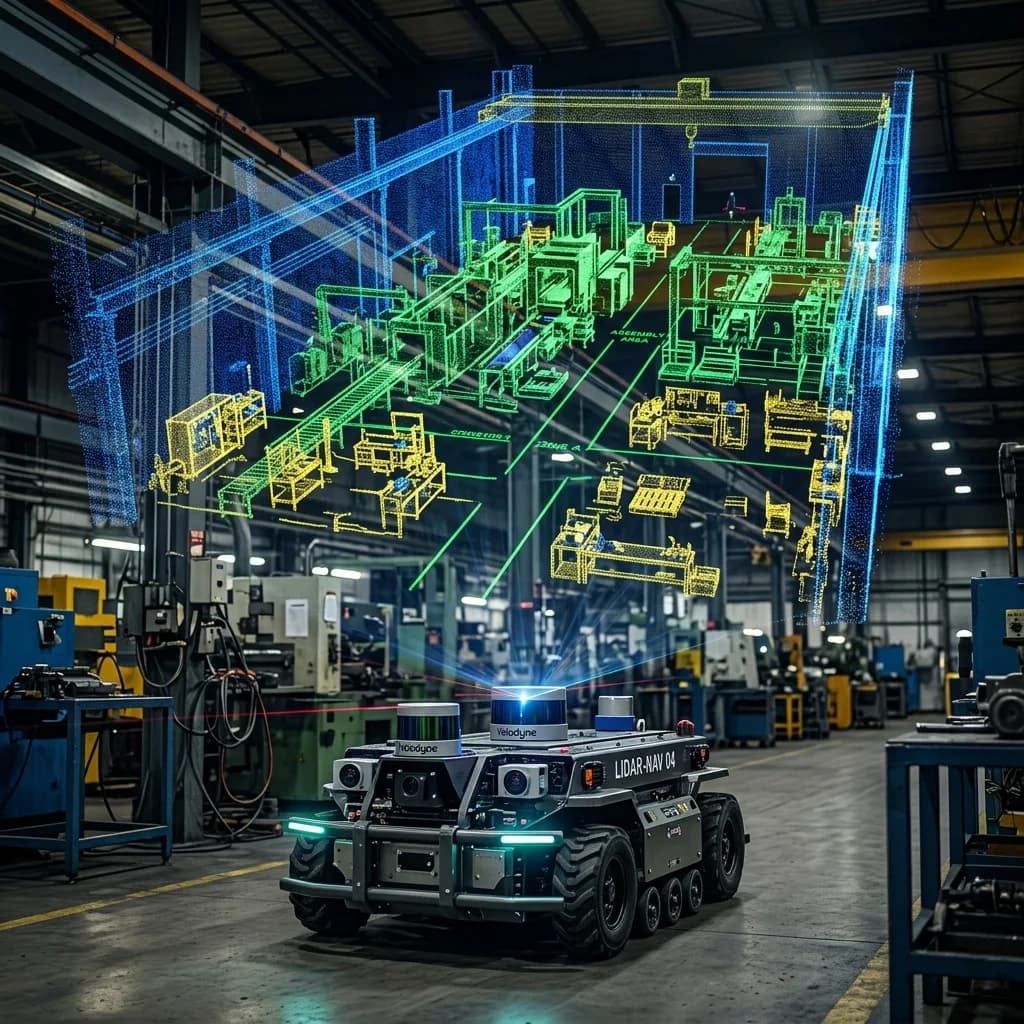
Finding, identifying, and precisely outlining objects, parts, and regions down to the pixel, even in cluttered scenes. industrial computer vision supports automated perception where visual data can improve inspection or process awareness.
Detecting surface defects, contamination, and deviations at production speed.
Dimensional checks and alignment from camera and depth data for in-line measurement.
3D part localization and orientation for robots, grippers, and automated assembly.
Extracting text and codes from products, labels, and paperwork, even when print quality or angle varies.
Depth, point clouds, and multi-camera views for complex scene understanding.
Streaming, real-time inference on live camera feeds for safety, throughput, and quality.
MLOps & Production AI
Models create value when they run reliably in production. We engineer data and feature pipelines, reproducible training, experiment tracking, model deployment, and performance monitoring. AI model lifecycle management provides the structure for dependable operational use.
Outcomes
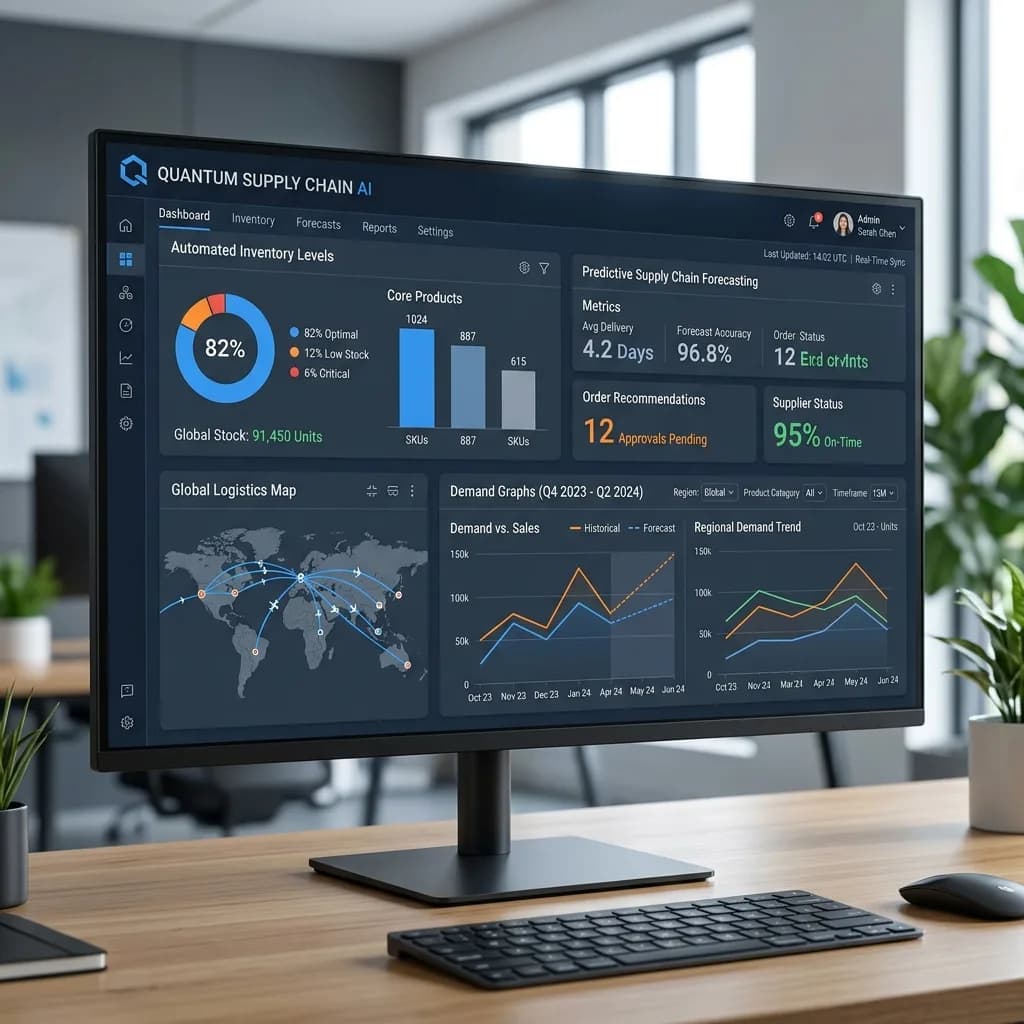
Working with an Industrial AI company can deliver clearer operational signals, more consistent quality, faster decisions, and intelligent tools that reduce repetitive work.