Research & Development
We invest in research across the AI landscape:
models for prediction, classification, optimization, and anomaly detection on industrial data.
applied generation for documentation, design assistance, and knowledge work in technical domains.
autonomous agents that plan and execute multi-step operational workflows, adjusting the plan as conditions change.
models built for the constraints of the plant: noisy data, edge deployment, safety, and explainability.
inspection, detection, measurement, and guidance from camera and sensor streams across the production line.
forecasting failures, demand, quality, and throughput before they become costly operational problems.
turning scattered technical knowledge into searchable, usable intelligence for every engineer on the team.
combining AI with automation to handle complex, variable processes that fixed rules alone can't cover.
systems that turn data and models into better, faster operational decisions across the business.
Real-World Applications
Research only matters when it ships. We apply AI to:
- ▸predictive maintenance that flags failures before they cause downtime;
- ▸computer-vision quality inspection that catches defects humans miss;
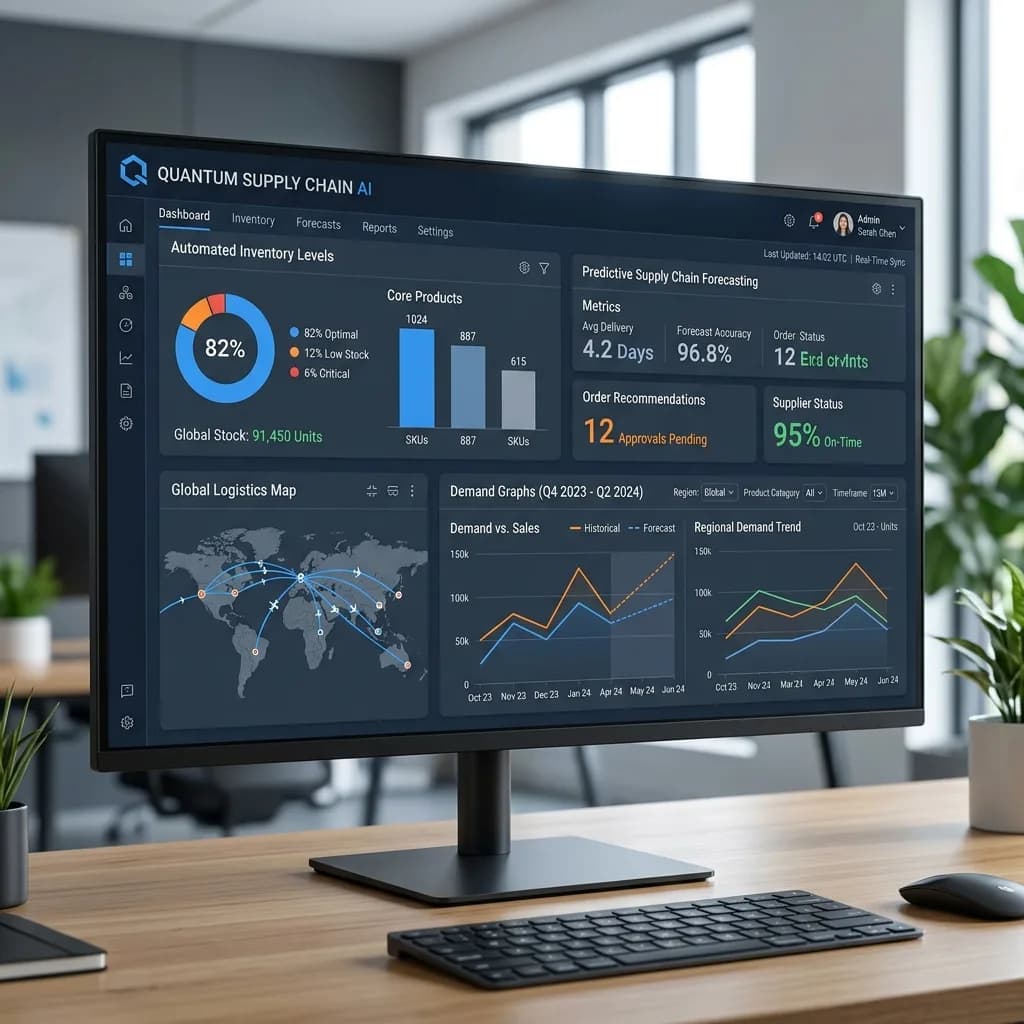
- ▸demand and production forecasting that tightens planning;
- ▸AI assistants and intelligent search that put institutional knowledge at the workforce's fingertips;
- ▸operational analytics that surface the few signals that matter from millions of data points.
How We Engineer AI Responsibly
Industrial AI carries real consequences, so we engineer for reliability, explainability, data governance, and human oversight from day one. We validate models against real operational data, monitor them in production, and design for graceful failure. We deploy AI where it earns trust — and we're candid about where it doesn't yet.
Technology foundation. We work across a continuously evolving AI stack rather than committing to any single vendor or framework. Our engineers choose best-in-class models, tools, and platforms for each problem — across machine learning, generative and agentic AI, computer vision, and analytics — and adopt new capabilities as the field advances. The stack is a means to the outcome, never a limit on it.
Deep Learning & GPU-Accelerated Training
Modern industrial AI is built on deep learning, and deep learning is built on GPUs. We design, train, and optimize neural networks — convolutional networks for vision, transformers for language and sequence data, graph networks for connected assets, and diffusion and generative models where they fit — on GPU-accelerated infrastructure.
single- and multi-GPU distributed training on the NVIDIA CUDA ecosystem (cuDNN, mixed-precision, data- and model-parallel strategies) to train larger models faster.
adapting pretrained vision and language models to industrial domains with transfer learning, fine-tuning, and retrieval, rather than training from scratch where it isn't warranted.
training control and decision policies in simulation before deployment (see Robotics Simulation & GPU Training).
quantization, pruning, and distillation, with runtime optimization (e.g., TensorRT) so models run fast and affordably on edge hardware such as NVIDIA Jetson — close to the machines they serve.
Computer Vision
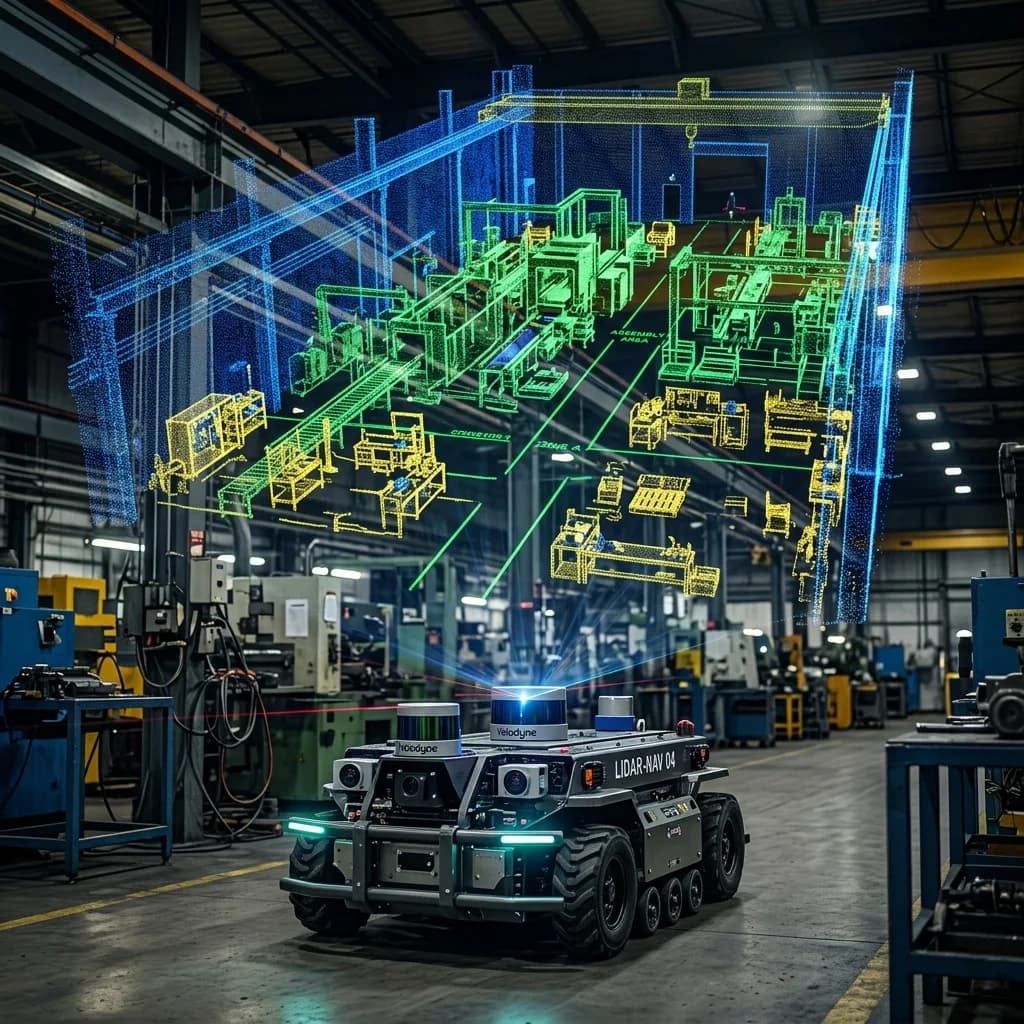
finding, identifying, and precisely outlining objects, parts, and regions down to the pixel, even in cluttered scenes.
catching surface defects, contamination, and deviations that human inspection misses or can't sustain at speed.
dimensional checks and alignment from camera and depth data, replacing calipers and manual gauges on the line.
locating and orienting parts in 3D space to guide robots, grippers, and automated assembly in real time.
extracting text and codes from products, labels, and paperwork, even when print quality or angle varies.
depth, point clouds, and fused views from multiple cameras for navigating and understanding complex scenes.
streaming, real-time inference on live camera feeds (e.g., GPU video-analytics pipelines) for safety, throughput, and quality.
MLOps & Production AI
Models only create value when they run reliably in production. We engineer the full lifecycle: data and feature pipelines, reproducible training, experiment tracking and model registries, CI/CD for models, and continuous monitoring for drift and performance — with the data governance and human oversight industrial AI demands.